
Protest music is often imagined as something vociferous and loud: a chant, a surge, a rallying cry. But Rupa Bentuk Rangka Derhaka asks a different question: what if resistance is quieter, unconventional, and built from what the world leaves behind?
Announced by Strange Weather Dunia (the label arm of the Strange Weather collective), their SWD 003 release arrives as a cross-border collaboration between bani haykal, Shivangi Mariam Raj, Randa Jarrar, and Hanna Hazzan—a work stitched together from sound, text, and sculptural instruments made out of discarded bicycle frames.
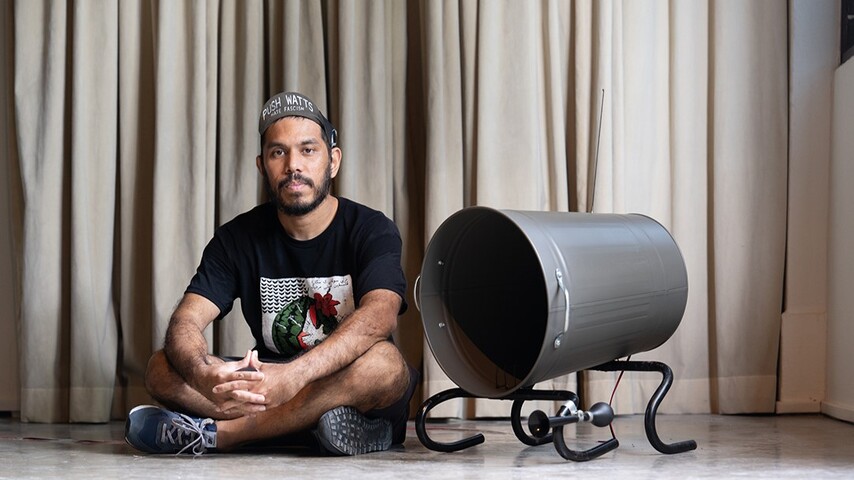
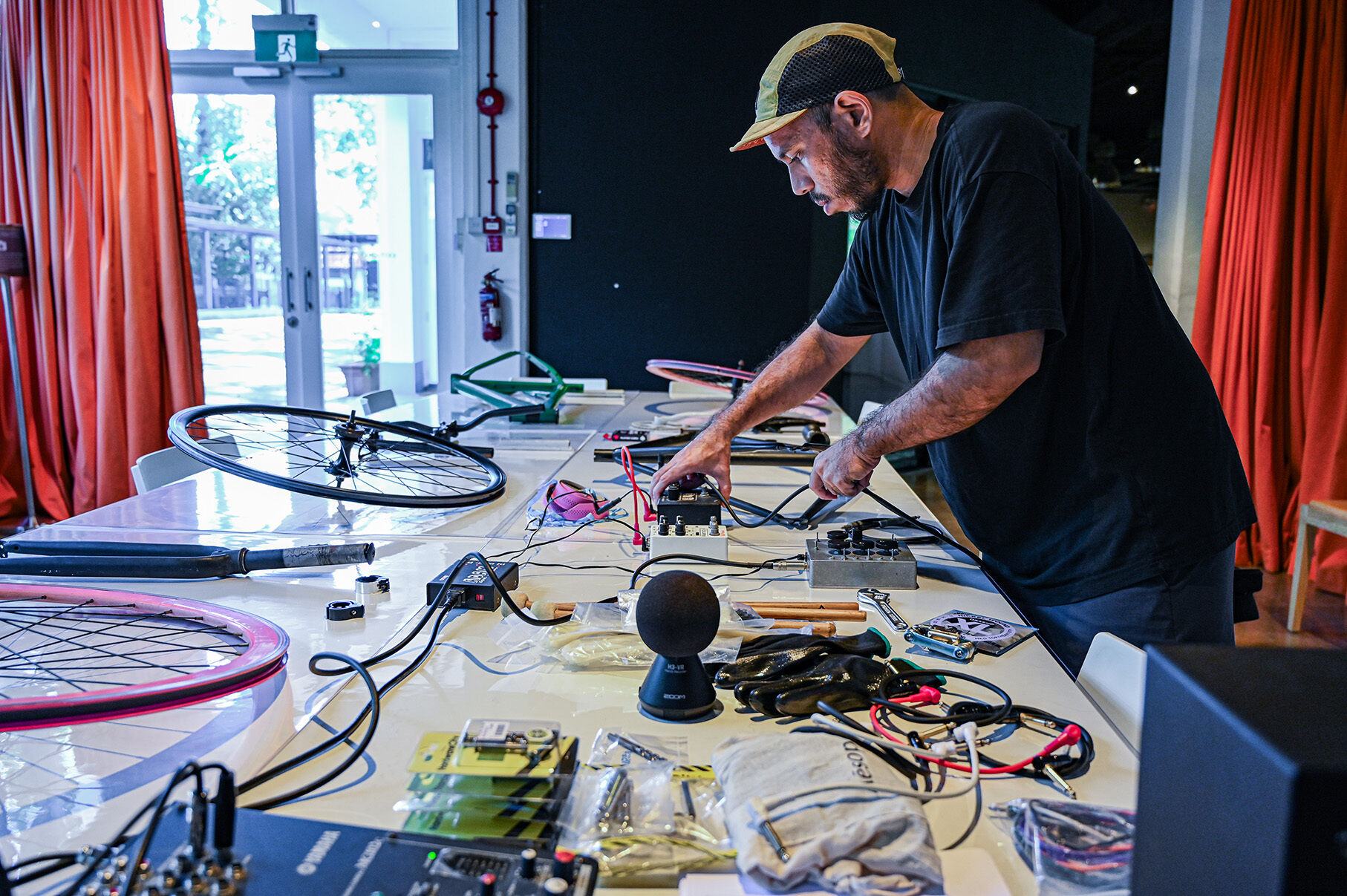
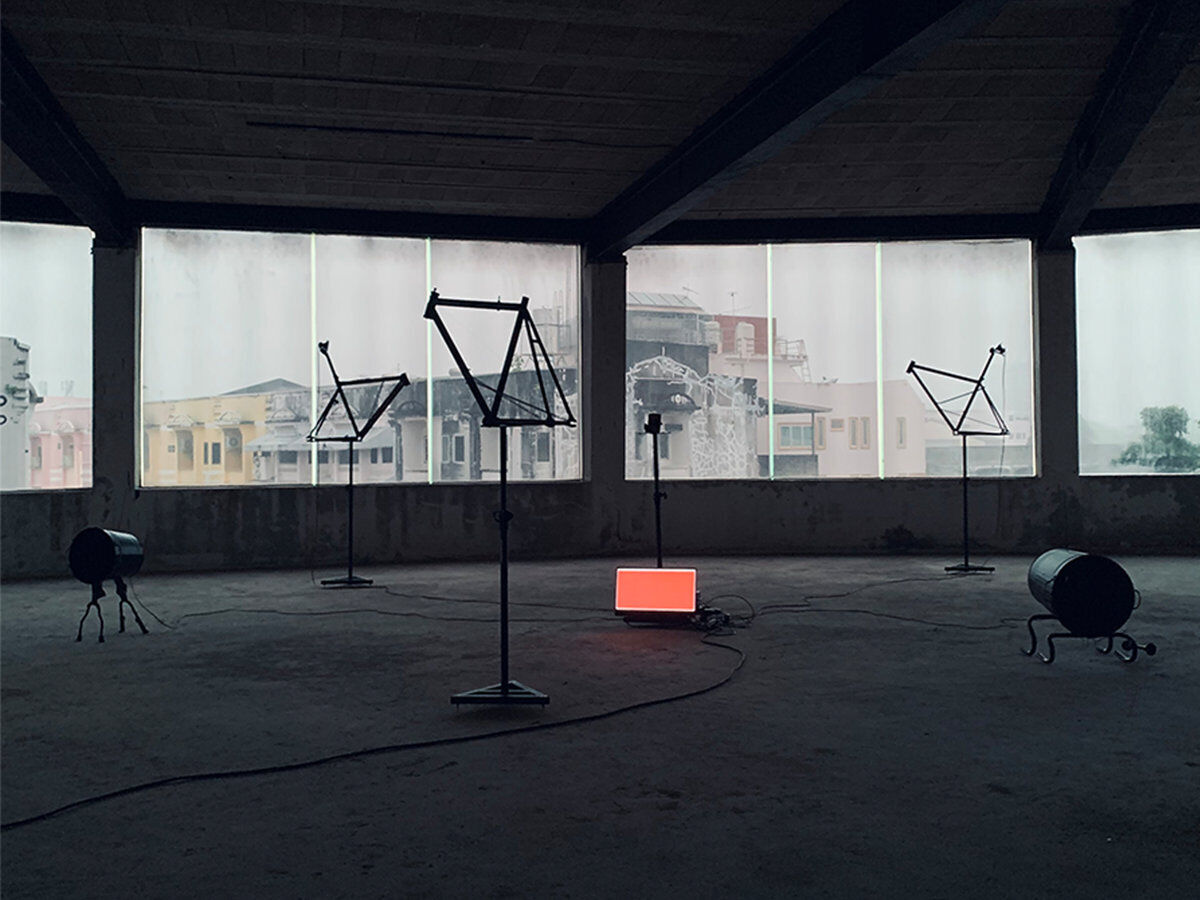
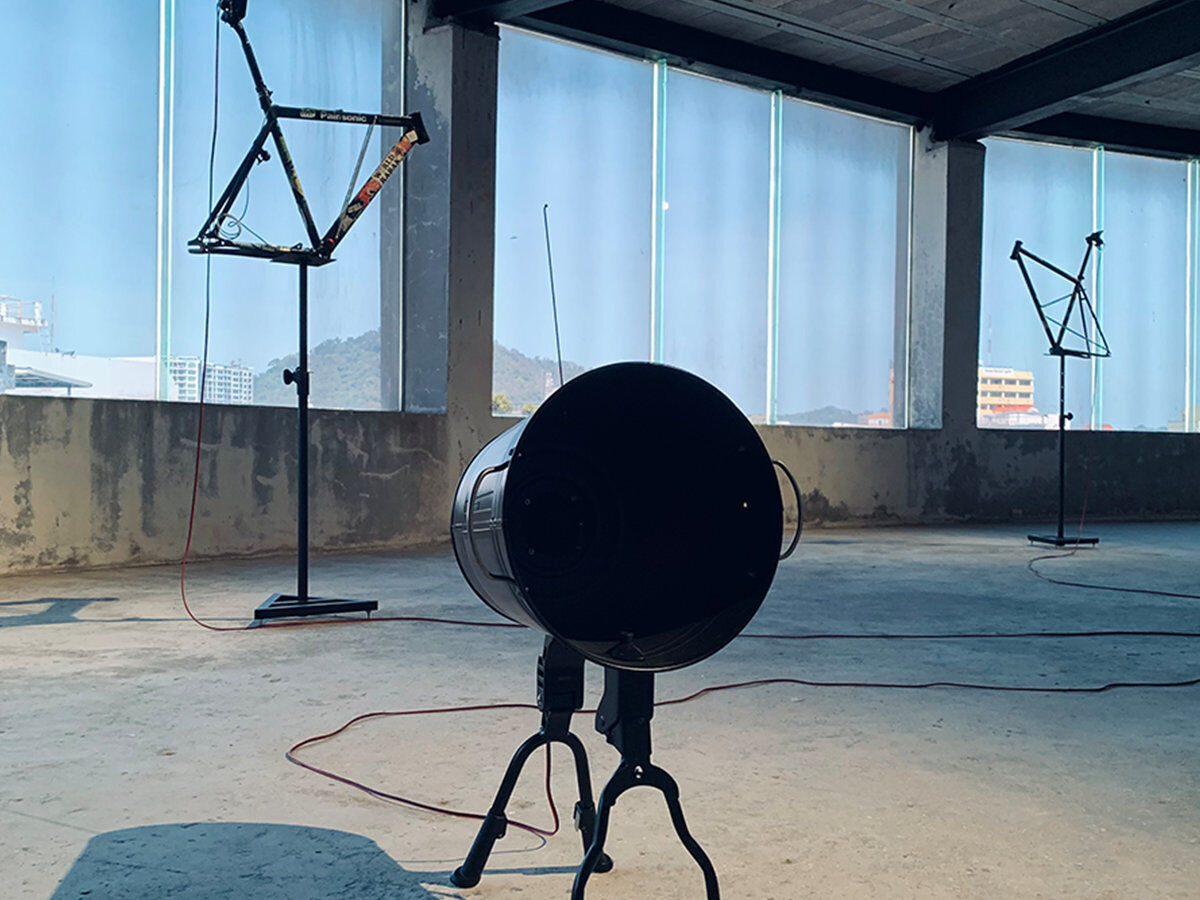
At the centre of Rupa Bentuk Rangka Derhaka is bani haykal’s long-running fascination with tools: how they shape our bodies, our routines, and the ways we communicate. Here, that interest becomes physical. The project’s sonic backbone is built from bicycle frames transformed into instruments—an approach that reportedly makes up over 90% of the record’s percussive and string elements.
That detail matters because the bicycle isn’t treated as a quirky aesthetic choice. It’s framed as an “instrument of resistance”, paying homage to communities in Gaza who have adapted bicycle frames into tools of survival—repurposing them into devices like sewing machines and washing machines in the ongoing work of rebuilding under siege. The symbolism lands with a heavy, undeniable clarity: scrap becomes infrastructure; infrastructure becomes sound; sound becomes testimony.
The record is described as a rumination on resistance—caught between “debris and absence,” “defiance and silence.” Rather than chasing a single, definitive mood, the project leans into rupture: textures that fray at the edges, voices that appear like transmissions, atmospheres that feel thick with pressure. It imagines a place where different realities of violence don’t just echo each other—they bleed together, collapsing distance between geographies that are often discussed separately.
This is where Rupa Bentuk Rangka Derhaka becomes less about “representing” struggle and more about building a sonic environment where struggle is felt as overlapping layers: land and language, occupation and diaspora, the intimate and the systemic.
Hanna Hazzan’s field recordings—captured across numerous sites in Northern Palestine—form the record’s textural foundation. Field recordings can sometimes be used as ambience, a kind of documentary wallpaper. But here they’re positioned as something sharper: a “counter-memory to erasure,” an audible archive that insists on presence.
In practice, that suggests listening not just for recognisable sounds, but for grain and atmosphere—the way wind, footsteps, engines, distant voices, and the hum of everyday life can carry political weight when a place is constantly being rewritten by force.
Woven into those environments are words by Shivangi Mariam Raj, excerpted from her essay Tracing the Coordinates of Absence. Her writing is situated in the legacies of colonial violence in India, speaking to demolition of homes, land dispossession, and histories that continue to haunt the present. The project draws a line between these realities and Palestine’s struggle—not as a shallow comparison, but as an acknowledgement of recurring structures of power, and the ways they replicate across borders.
That’s the record’s bigger conceptual move: it doesn’t treat oppression as isolated headlines. It frames it as systems and patterns—felt differently in different places, but recognisable in their methods of removal, fragmentation, and control.
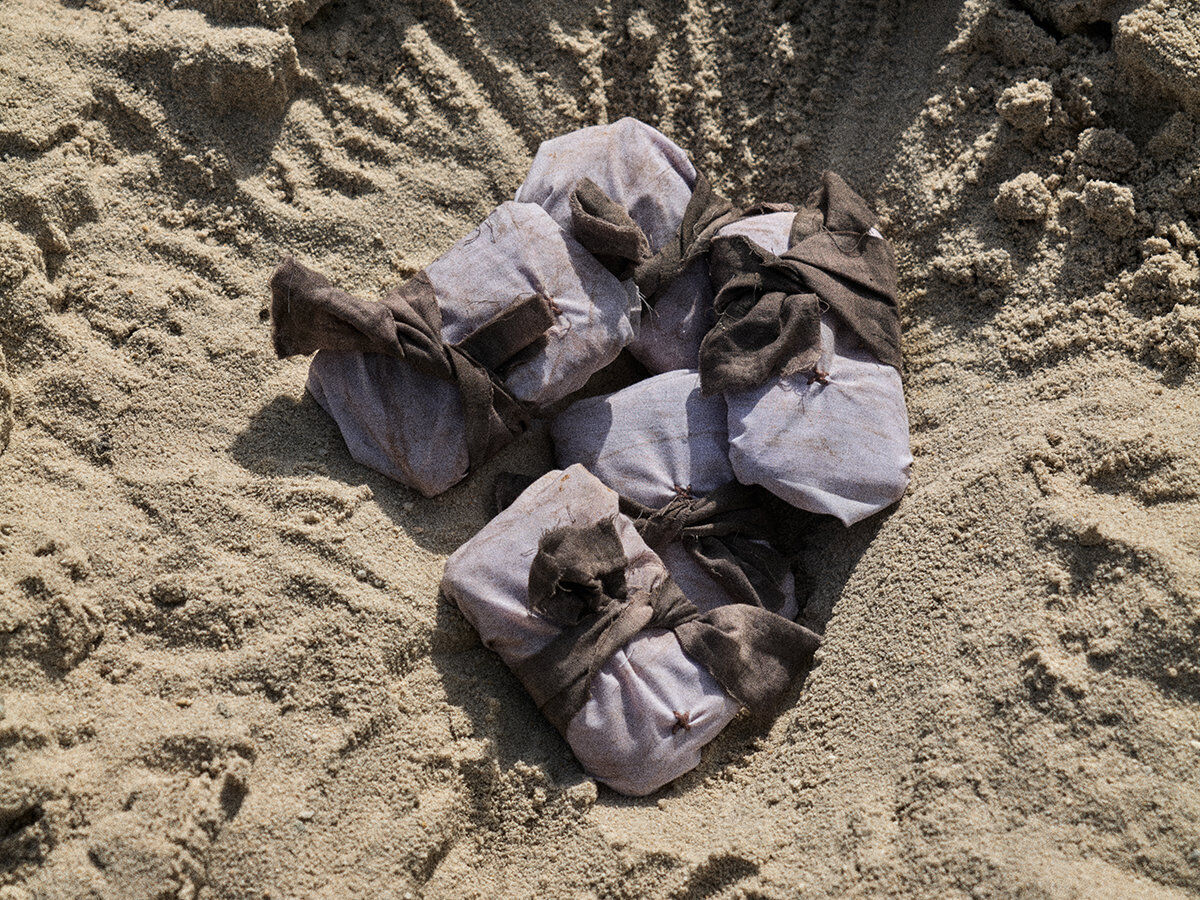
Randa Jarrar’s contribution is shaped by correspondences with Palestinians in Gaza and her own position in the diaspora. Her perspective centres on the collapse of infrastructure and the way daily life breaks apart under occupation—how the loss of utilities, spaces, and continuity can become its own form of violence.
What’s striking here is the emphasis on what isn’t said: the “hollowed-out spaces” left by war, where silence can feel louder than impact. In a sonic work, that idea becomes potent—because silence isn’t emptiness, it’s tension, it's withholding.

If this is your first encounter with Strange Weather Dunia, the label frames itself as a Southeast Asia-rooted platform exploring memory, mysticism, and myth—recasting “lost residues” into contemporary resonance. It’s the kind of mission statement that can read abstract on paper, but Rupa Bentuk Rangka Derhaka makes it tangible: sound as remembrance, listening as a form of attention, art as collective action rather than commodity.
That last point is not a footnote. All sales from the record are set to be donated to organisations and mutual aid groups working in support of and within Palestine, with no proceeds going to any contributor. In a music ecosystem that often turns “cause” into branding, this is a hardline material decision—one that shapes how the work should be received.
For listeners drawn to experimental music that doesn’t separate form from politics—and for anyone curious about what it means to create across borders without flattening lived realities—Rupa Bentuk Rangka Derhaka feels both like a welcome and a provocation, urging us to hear resistance as something fluid and constantly evolving rather than a single rallying cry.


